 *For a general introduction to terpenes as a whole, check out The Dirt on Terpenes.
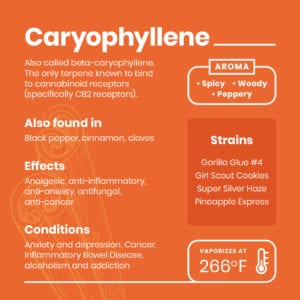
Caryophyllene may be a mouthful to say (pronounced “carry-awful-een“ and often referred to as β-caryophyllene), but it’s a mouthful most humans are actually very familiar with – this terpene is responsible for the spicy flavor of pepper. It’s also present in the woody, musky elements of cinnamon, cloves, and rosemary and is approved by the FDA as a dietary cannabinoid, granted GRAS (Generally Recognized as Safe) status.
Peppery Pain Relief
Since caryophyllene can bind directly with CB2 receptors, it is also being scrutinized for its therapeutic effects. Studies thus far have shown clear anti-inflammatory effects, making it a common addition to anti-inflammatory topicals and creams. Other studies have suggested that caryophyllene could also exert analgesic, neuroprotective, anti-anxiety, and antidepressant effects.
Where to Find Caryophyllene
Caryophyllene-heavy strains are often quite pungent, and include several highly popular cultivars. It’s prominent in many cookie strains — including GSC, Cookies and Cream, and Candyland – as well as bestsellers like Gelato, Original Glue, Sour Diesel.