Live rosin and live resin sound almost identical, which can confuse some shoppers browsing the concentrates display. Both promise bold flavor and serious potency, but they’re made in completely different ways. That difference shows up in the jar, the dab, and the price tag.
We’re breaking down exactly what separates live rosin from live resin, so you can walk up to the case at Pure Options knowing exactly what you’re grabbing.
Key Takeaways:
- Both live resin and live rosin start with fresh frozen cannabis, not dried and cured flower.
- Live resin uses solvent-based extraction, typically butane or propane.
- Producers use ice water, heat, and pressure to create solventless live rosin.
- Because it’s more labor-intensive, live rosin is usually pricier.
- Both offer full-spectrum flavor and effects, unlike more refined products like distillate.
- Pure Options carries both live rosin and live resin products across our Michigan menu.
What “Live” Actually Means
Before getting into the differences, it helps to know what live rosin and live resin have in common. Both start with fresh frozen cannabis. Instead of drying and curing the flower the traditional way, growers harvest the plant at peak ripeness and immediately flash freeze it.
That fast freeze locks in terpenes and cannabinoids that would otherwise break down during a normal dry and cure cycle. This is why live concentrates taste and hit the way they do.
The word live in both names refers to this fresh frozen starting material, not the extraction method. That’s where the two products actually part ways.
Live Resin: Solvents Do the Work
Producers extract live resin using a solvent, typically butane or propane, run through a closed-loop system. The solvent strips the cannabinoids and terpenes away from the frozen plant matter. From there, the extract goes through a purging process to remove any residual solvent. This leaves behind a potent, flavorful concentrate in a range of textures like sauce, badder, and sugar.
Because the solvent pulls terpenes and cannabinoids so effectively from the plant, live resin delivers a full-spectrum profile with strong aroma and flavor.
It’s also typically easier and more affordable to produce at scale compared to live rosin, which is why you’ll usually see it priced a bit lower.
Live Rosin: No Solvents, Just Pressure
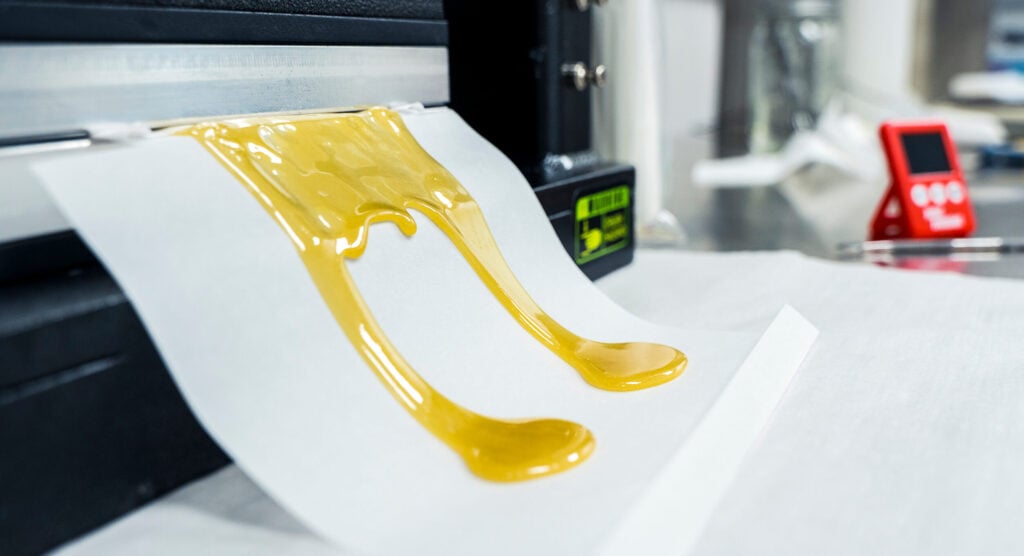
Live rosin takes a different road entirely. Instead of solvents, producers use ice water extraction and heat. First, they agitate fresh frozen flower in ice water to separate the trichomes (tiny resin glands packed with cannabinoids and terpenes) from the rest of the plant material. This creates bubble hash.
From there, extractors compress the bubble hash with heat and pressure in a rosin press, squeezing out the concentrate without a single drop of solvent. No butane, propane, or chemicals are involved at any point in the process. That’s why live rosin is classified as solventless, and why a lot of purists consider it the closest thing to tasting the plant exactly as it grew.
Because this process is more labor-intensive and typically starts with more premium flower to yield the same amount of finished product, live rosin tends to cost more than live resin.
So Which One Should You Choose?
Neither is objectively better. It comes down to what you’re after.
- Want maximum flavor and a completely solventless product? Live rosin is worth seeking out, even at a higher price point. Many consumers describe it as tasting closer to fresh flower than any other concentrate on the shelf.
- Want big, full-spectrum flavor and potency at a more accessible price? Live resin is a great everyday option, and it shows up in vape carts, dabbable concentrates, and even infused edibles and pre-rolls.
Either way, both concentrates are a step up from something like distillate, which loses most of its terpene profile in the extraction process. If flavor and full-spectrum effects are what you’re after, live resin and live rosin will both get you there.
The real decision is between solventless purity at a higher price and a more affordable option that still brings serious flavor and potency to the table.
Tips Before You Try Either
- Check your labels. Look for a current certificate of analysis, or COA, so you know the cannabinoid and terpene breakdown before you buy.
- Start low, go slow. Most concentrates range between 60 and 90 percent THC, compared to 15 to 30 percent for typical flower, so a little goes a long way.
- Store them right. Cool, dark places help preserve potency and flavor.
- Ask your budtender. Pure Options staff can walk you through differences in texture, flavor, and potency based on your experience level.
For more information, check out our Cannabis Concentrates 101 guide.
FAQs About Live Rosin vs Live Resin
- Is live rosin better than live resin?
Not necessarily better, just different. Some prize solventless live rosin for its purity and flavor. Live resin tends to be more affordable and just as full-spectrum in effect. - Why is live rosin more expensive than live resin?
Live rosin requires more starting flower and a more labor-intensive, solventless process to yield the same amount of finished concentrate, which drives up the price. - Are live rosin and live resin both full spectrum?
Yes. Both preserve a wide range of cannabinoids and terpenes from the original flower, unlike distillate, which loses most of its flavor and aroma during the extraction process. - Is solventless automatically safer?
Not necessarily safer, but some consumers prefer it because it uses no chemical solvents. All concentrates sold at a licensed Michigan dispensary are safe when produced by reputable, lab-tested brands.
Explore Concentrates at Pure Options
At Pure Options, we’re experts, but we’re also your pals. Whether you’re new to concentrates or a seasoned dab rig regular, we carry both live rosin and live resin across our Michigan menu, along with plenty of other concentrate styles for every kind of consumer.
Still not sure which one fits your vibe? Shop our concentrates online or visit a Pure Options location near you to chat with a team member and see what’s fresh on the shelf.
DISCLAIMER: The contents of this blog are intended for informational purposes only. Always seek the advice of a physician or other qualified healthcare provider with any questions you may have regarding a medical condition.